How VoIP Helps Digital Nomads Stay Connected
How VoIP Helps Digital Nomads Stay Connected
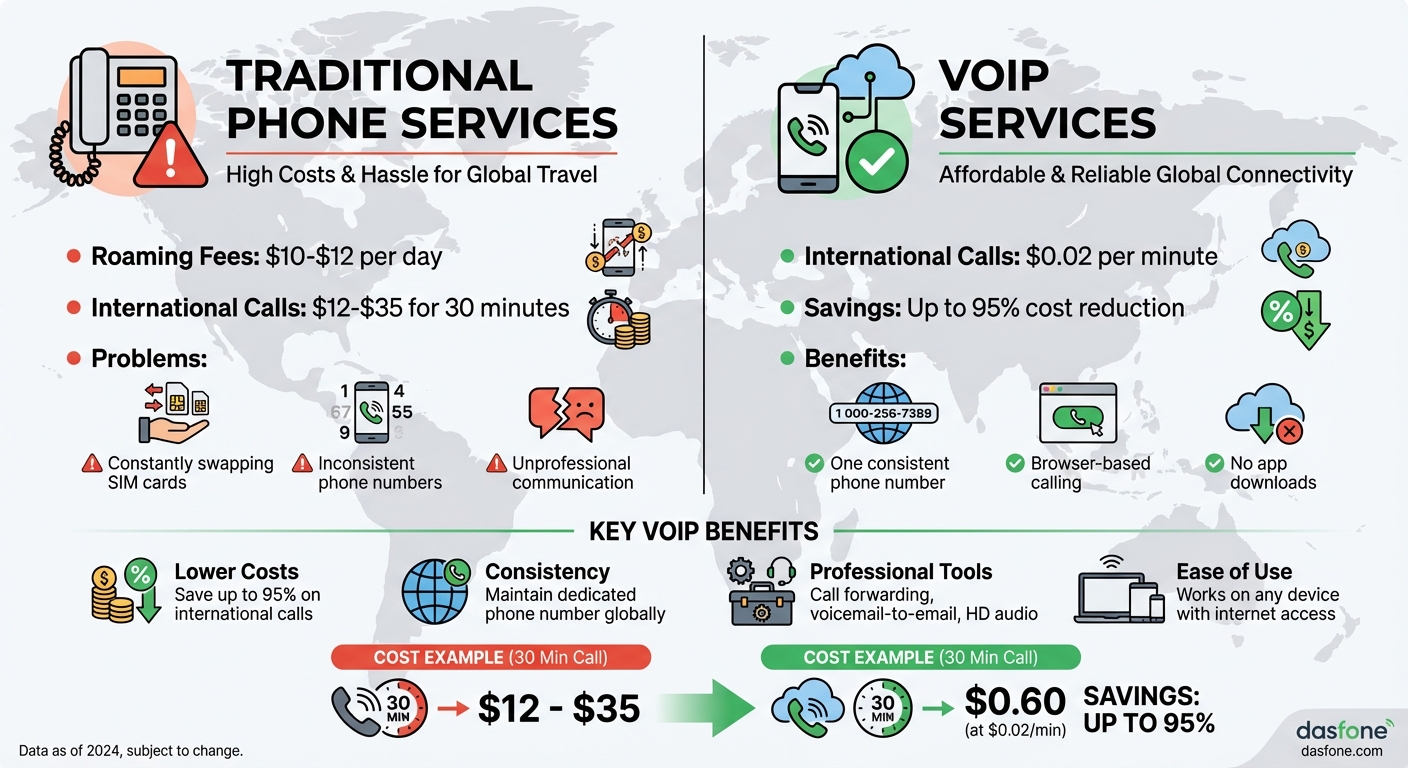
Staying connected while traveling can be tough for digital nomads. Traditional phone services are costly, with roaming fees reaching $10–$12 per day and international calls costing up to $35 for just 30 minutes. Constantly swapping SIM cards adds to the hassle, making communication inconsistent and unprofessional.
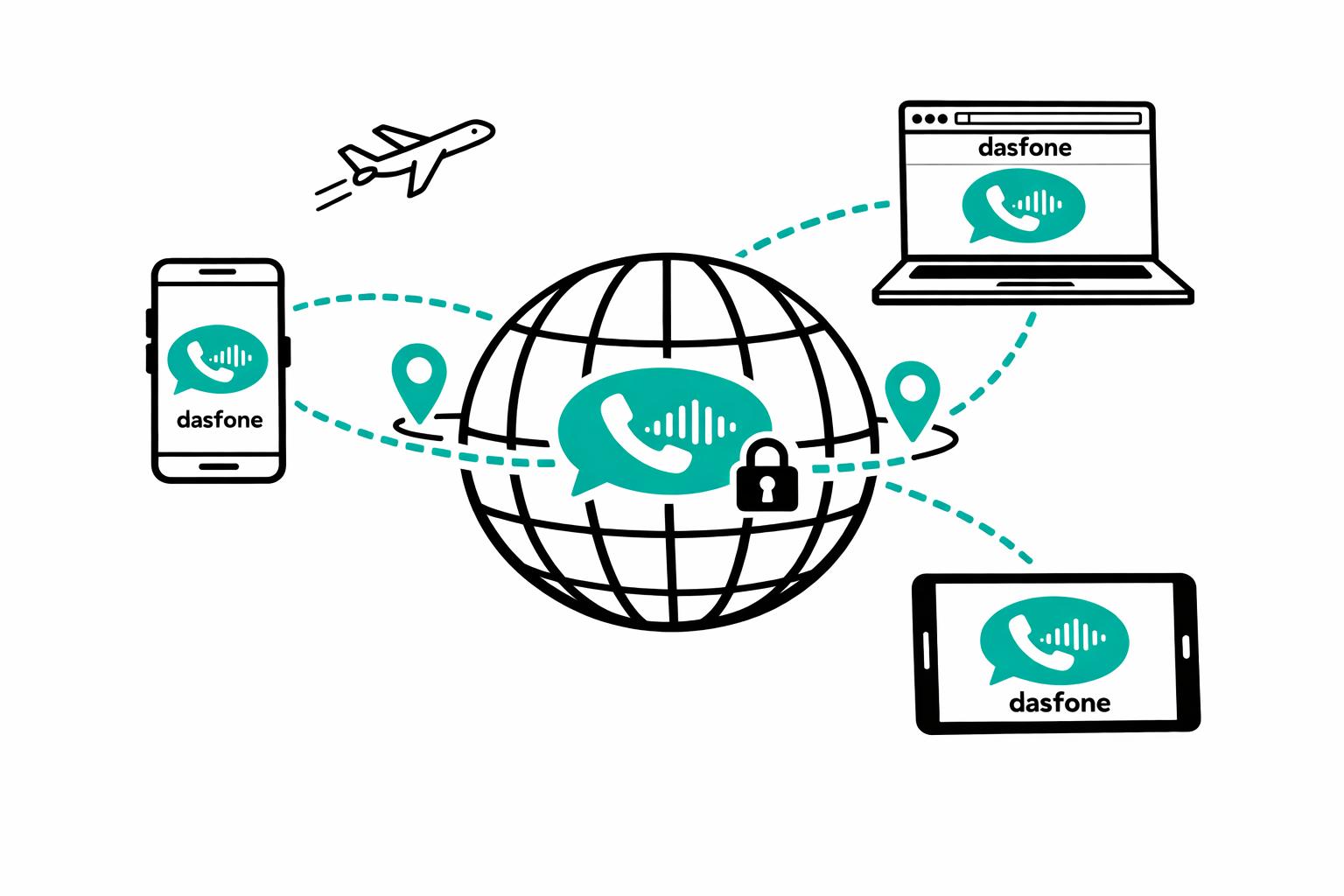
VoIP solves these problems by letting you make calls using the internet. It’s affordable, with international calls costing as little as $0.02 per minute, and it allows you to keep a consistent phone number no matter where you are. You can make secure, high-quality calls directly from your browser without downloading apps or dealing with subscriptions.
Key benefits of VoIP for digital nomads:
- Lower costs: Save up to 95% on international calls compared to traditional carriers.
- Consistency: Maintain a dedicated phone number for clients, banks, and family.
- Professional tools: Features like call forwarding, voicemail-to-email, and HD audio ensure reliability.
- Ease of use: Works on any device with internet access, even with low-speed connections.
Platforms like Dasfone make it even simpler with pay-as-you-go pricing, no hidden fees, and browser-based calling. Whether you're working from a café in Bali or a coworking space in Lisbon, VoIP keeps you connected without breaking the bank.
Connectivity Problems Digital Nomads Face
The allure of working from anywhere - be it a serene beach in Bali or a quaint mountain village in Peru - often comes with unexpected connectivity headaches. Staying connected isn’t always as seamless as it sounds. Digital nomads face a few key challenges when it comes to reliable communication, making dependable VoIP solutions more than just a convenience.
Poor Internet Access in Remote Areas
Remote destinations often lack solid internet infrastructure. In places like island nations or mountainous regions, connections can be unstable, expensive, or both [4]. For smooth voice calls, you need stable bandwidth and low latency. Unfortunately, rural areas are prone to high latency and packet loss, which leads to dropped calls or distorted audio - neither of which leaves a good impression professionally.
Public Wi-Fi, like those in cafes or hotels, adds another layer of risk. These networks are often unencrypted, leaving you vulnerable to data theft or man-in-the-middle attacks [4]. To make matters worse, certain countries, such as the UAE and China, impose restrictions on VoIP apps, slowing or even blocking them unless you use a VPN [1]. Always test Wi-Fi speeds ahead of critical calls and keep a mobile hotspot as a backup. Beyond connectivity, fluctuating costs and inconsistent phone numbers only add to the complexity.
Expensive International Roaming and Call Charges
Using traditional phone services while traveling internationally can quickly rack up costs. Roaming fees and international call charges are notoriously high. However, combining a local SIM card with browser-based calling can significantly cut expenses, often costing just $20–$50 per month [4].
Changing Phone Numbers with Local SIM Cards
Switching to a local SIM card every time you travel may save money, but it creates a new problem: keeping your contact information consistent. Each swap means clients, banks, and family members lose access to your reliable number [1]. This inconsistency can be especially frustrating when managing time-sensitive matters across multiple time zones. These hurdles highlight the importance of VoIP services, which offer a stable, cost-effective way to maintain seamless communication no matter where you go.
How VoIP Addresses These Problems
VoIP (Voice over Internet Protocol) has completely changed how digital nomads stay connected by turning audio into digital data packets and sending them over the internet. This means you can make and receive calls from just about anywhere with a reliable internet connection - whether you're on Wi-Fi at a coworking space, using cellular data on your phone, or plugged into an Ethernet connection at your Airbnb.
Make Calls Anywhere with Internet Access
With VoIP, as long as you’re online, you’re reachable. Even a basic 100 kbps connection can handle calls with decent quality, though a 5 Mbps connection is better to avoid issues like lag or dropped calls[2][3]. What’s more, you can stick to one dedicated phone number no matter where you are in the world.
Use VoIP Directly in Your Browser
Some browser-based calling apps work right in your browser, so there’s no need to download apps or worry about taking up storage space. Just open your browser and start calling - no installations, no waiting for updates. This option works on any device that has a browser, whether it’s a laptop, tablet, or smartphone. These platforms rely on WebRTC (Web Real-Time Communication), a feature built into major browsers like Chrome, Safari, and Firefox since 2011[2]. WebRTC also includes built-in encryption (DTLS and SRTP) to secure your voice data. To get started, simply grant your browser microphone access when prompted. The result? A seamless calling experience with added security and convenience.
Features That Keep You Connected
Modern VoIP services come packed with tools designed for mobile professionals. Call forwarding lets you redirect calls to any device, ensuring you never miss an important conversation. Voicemail-to-email converts missed call recordings into emails, making it easy to manage communications no matter the time zone. Multi-device support ensures your single phone number rings across all your devices - laptop, tablet, and smartphone. And if you need some quiet time, the Do Not Disturb mode silences calls while still allowing voicemails to come through. Since everything is cloud-based, you can use the same phone number across all your devices, keeping everything simple and connected.
Lower Communication Costs with VoIP
For digital nomads constantly on the move, traditional phone bills can quickly become a financial burden. Just a 30-minute call while roaming can cost anywhere from $12 to $35. In contrast, browser-based VoIP services slash these costs by up to 95% per call, offering a much more budget-friendly solution [2].
Pay Only for What You Use
With pay-as-you-go (PAYG) VoIP, you avoid the hassle of monthly subscription fees, long-term contracts, and maintenance charges [7][8]. Instead, you’re charged solely for the minutes you use. Rates are transparently displayed before you make a call, making this option perfect for the unpredictable communication needs of nomadic lifestyles.
"The real beauty of PAYG is how it adapts to you. It directly reflects your actual usage, ensuring every cent you spend is for a real conversation, not just to keep a subscription active." - CallSky.io [7]
This flexibility has driven the PAYG market to a valuation of $1.58 billion, highlighting its appeal to travelers and remote workers seeking cost-effective communication options [7]. Unlike traditional carriers, which often round up call times or charge for unused minutes, PAYG ensures you only pay for what you truly use.
Reduced Rates for International Calls
VoIP services leverage least-cost routing technology to find the cheapest network path for each call, passing those savings directly to users [7]. Thanks to advancements in technology and growing competition, the average global rate for international calls is projected to drop to $0.12 per minute by 2026 - a 40% reduction compared to recent years [8].
Some providers already offer incredibly low rates, such as $0.02 per minute for calls to Mexico and $0.17 per minute for India, with no connection fees [8]. Pairing VoIP with a data-only eSIM can further cut communication expenses by up to 90%. Since voice calls typically consume just 0.5 to 1 MB of data per minute, this combination is a game-changer for cost-conscious travelers [1][6].
Professional Communication Features
For digital nomads, professional communication goes beyond just staying connected - it’s about building trust and maintaining credibility. Whether you’re working from Bali or Lisbon, clear and reliable communication is essential. VoIP technology plays a key role here, offering high-definition audio quality that outperforms traditional phone networks. This ensures your clients hear you clearly no matter where you’re calling from [5][2].
Clear Audio Quality and Encrypted Calls
VoIP’s HD voice technology provides audio clarity that surpasses regular PSTN calls [5][2]. What’s more, it uses encryption protocols like DTLS (Datagram Transport Layer Security) and SRTP (Secure Real-Time Transport Protocol) to safeguard your voice data during transmission [2].
This level of security is especially important when you’re working on public Wi-Fi - whether at an airport, hotel, or café. These networks are often targeted by hackers, making encryption a must for digital nomads. As Lauren Davies from bOnline explains:
"VoIP is known for high-quality audio and video calls - provided there's a reliable internet connection. This means a nomad working from a café can still look and sound just as professional as someone in an office setting." [3]
In addition to providing crystal-clear audio, VoIP helps ensure your professional identity remains consistent.
Use a Dedicated Phone Number
VoIP offers more than just clear and secure calls - it enables you to maintain a consistent caller ID. Constantly switching SIM cards while traveling can confuse clients and business contacts. With VoIP, you can use or purchase a dedicated phone number that stays the same no matter where you are. Whether you’re calling from Thailand or Portugal, your contacts will always see the same number.
This consistency is invaluable for professional interactions, especially with banks, government offices, and corporate clients. A stable, recognizable number not only avoids misunderstandings but also reinforces your reliability - key to building trust with new business connections.
How Dasfone Serves Digital Nomads
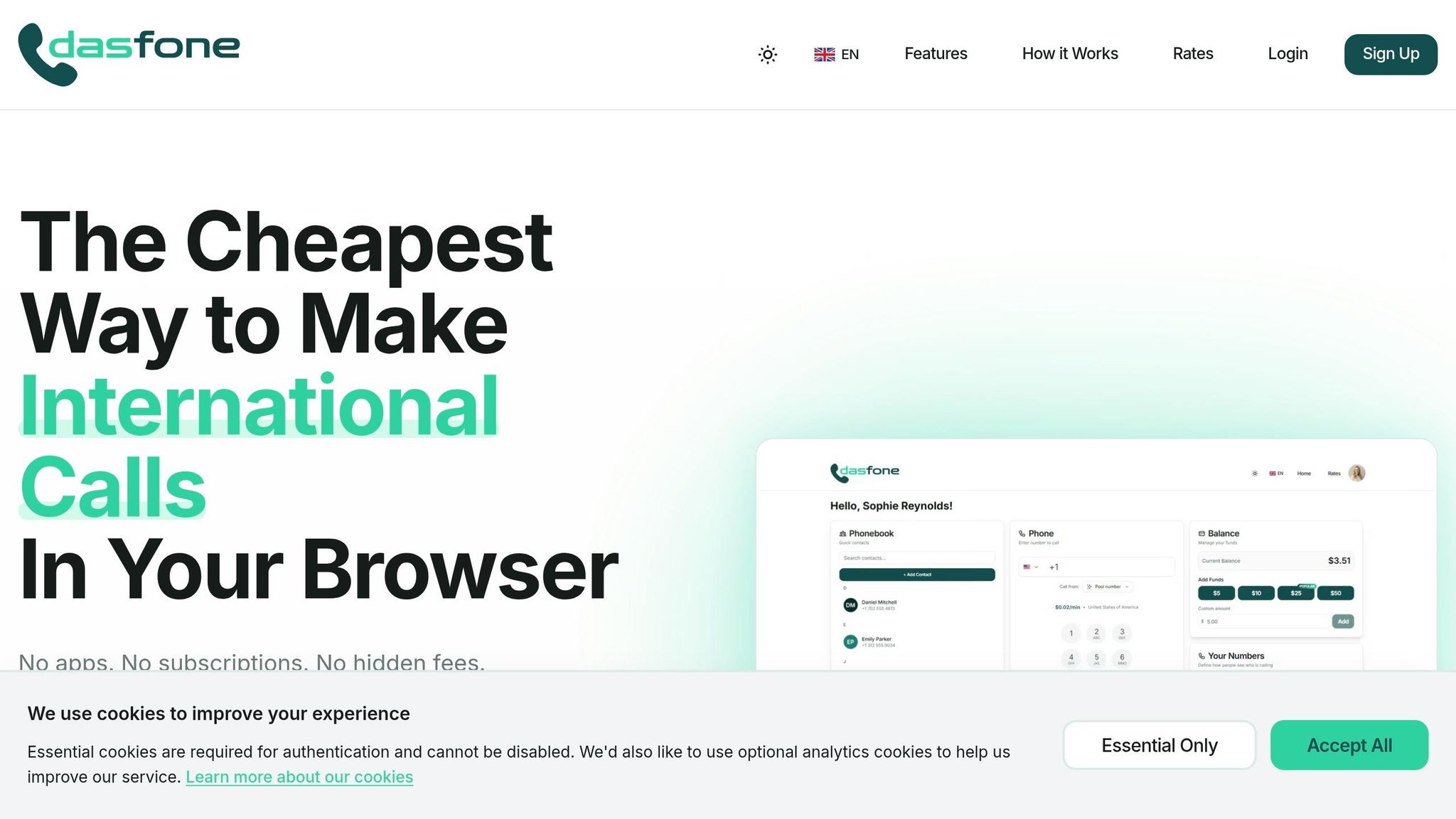
Dasfone tackles the connectivity challenges faced by digital nomads with a straightforward, browser-based calling platform. No app downloads or subscriptions are needed. In just minutes, you can sign up and start making international calls directly from your browser - whether it’s Chrome, Safari, Firefox, or Edge.
Quick Setup and Browser Access
Powered by WebRTC technology, Dasfone operates entirely within your browser. This means you can make calls from virtually any device with a browser, whether you're working on a laptop at a coworking space or using your tablet on the go. There’s no need to swap SIM cards or tinker with complicated settings. As NomaPhone puts it:
"Browser-based calling lets you dial any number directly from your browser." [2]
Clear Pricing and Worldwide Coverage
Dasfone offers a simple pay-as-you-go pricing model, starting at just $0.02 per minute with a $5 minimum top-up. Credits don’t expire, so you’re free from recurring monthly fees. Plus, new users get a $2 bonus at sign-up - enough for up to 100 free calling minutes. Use the promo code DF25, and you’ll receive 25% off your first top-up.
Compare that to international roaming, which can cost between $10 and $12 per day, and the savings quickly add up. [5][9]
Features Built for Mobile Professionals
Dasfone doesn’t just stop at affordability and ease of use - it’s packed with features designed for digital nomads. You’ll get high-definition audio with built-in encryption, ensuring secure and crystal-clear calls. The platform is also incredibly data-efficient, using only 0.2 to 0.5 MB per minute, and it performs well even with a connection as low as 100 kbps.
To keep things professional, you can verify your current phone number for a free caller ID or purchase a dedicated number from over 30 countries. A smart phonebook and real-time cost tracking help you stay organized and on top of your expenses. Dasfone is truly tailored for the needs of mobile professionals. [2]
Conclusion
VoIP has reshaped the way digital nomads stay connected while on the move. Gone are the days of juggling expensive roaming fees or endlessly swapping SIM cards. With a reliable internet connection, nomads can now conduct professional calls from virtually anywhere. As TechRound highlights:
"VoIP is a revolutionary tool for many digital nomads, saving both time and money. It helps reduce operational costs, enhances professionalism and enables seamless communication from virtually anywhere in the world." [3]
Platforms like Dasfone take this convenience a step further by removing the hassle of app installations or subscription sign-ups. International calls can be made directly from your browser in under a minute. With rates starting as low as $0.02 per minute and a straightforward pay-as-you-go model, you only pay for what you use - no hidden fees or expiring credits.
Despite its simplicity, Dasfone ensures you maintain a professional image with features like HD audio, encryption, and consistent caller ID. Even on low-speed internet connections (as little as 100 kbps), the platform delivers reliable service. Whether you're calling banks, government offices, or businesses that don't rely on messaging apps, this solution is perfect for digital nomads working from cafés, coworking spaces, or anywhere else their adventures take them.
FAQs
Will VoIP work on slow or spotty internet?
VoIP can function even on slower or unstable internet connections, but you might notice a drop in call quality due to factors like latency or packet loss. Adjusting network settings can sometimes improve performance. For digital nomads, platforms like dasfone are tailored to work with less reliable connections, enabling browser-based international calls with flexible, pay-as-you-go plans. That said, extremely poor internet conditions could still lead to interruptions.
How much data do VoIP calls use when traveling?
VoIP calls typically consume between 0.2 and 0.5 MB of data per minute, depending on factors like call quality and compression settings. To keep data usage low while maintaining clear audio, it's a good idea to stick to standard call quality settings.
How do I keep one phone number across countries with Dasfone?
With Dasfone, you can get a dedicated caller ID that lets you maintain a single, consistent phone number for all your outbound calls - no matter where you are in the world. Forget about juggling SIM cards or switching carriers. This feature is perfect for digital nomads who need a dependable, global contact number to stay connected seamlessly.
Related Articles
Ready to Make International Calls?
Try dasfone today and make your first international call in seconds. No app download, no subscription—just instant, affordable calling from your browser.
Start Calling Now