How Browser-Based Calling Secures Business Deals
How Browser-Based Calling Secures Business Deals
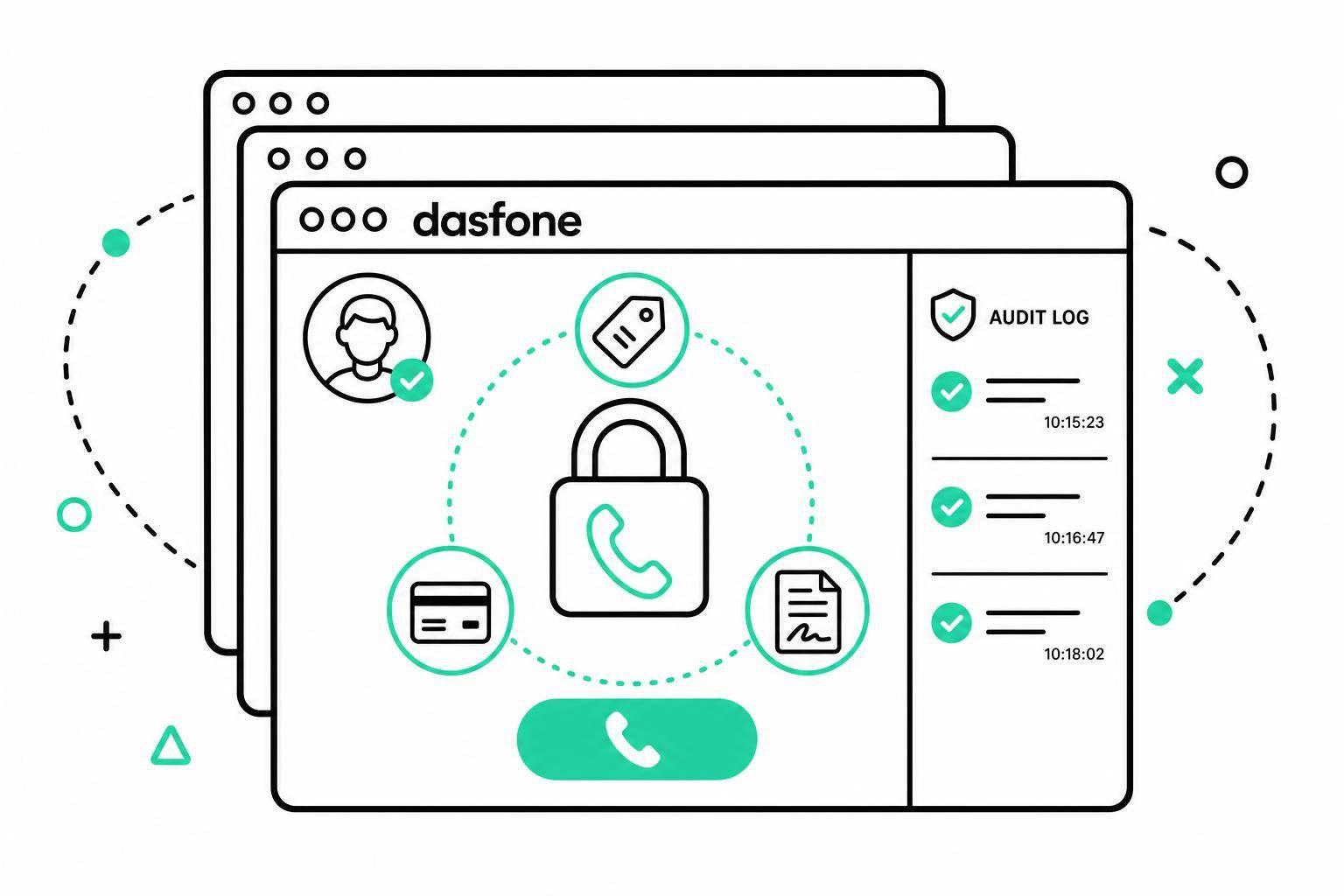
If you discuss prices, bank details, or contract terms by phone, the line itself can become a risk. I’d sum it up like this: browser-based calling helps protect deal talks by using built-in encryption, browser permission checks, caller ID controls, and call logs - all without extra apps or desk phones.
Here’s the short version:
- WebRTC calls encrypt audio by default
- TLS, DTLS, and SRTP help protect call setup and voice traffic
- Browser permission prompts help block silent mic access
- Dedicated caller ID can help teams get calls answered
- Centralized logs and recording controls help with reviews and disputes
- Pay-as-you-go pricing can fit teams with uneven call volume
- A $5 minimum top-up keeps entry cost low
I also see a clear split between old phone setups and browser calling in three areas: privacy during transit, caller verification, and recordkeeping. That matters when a call could confirm a wire, settle pricing, or lock in contract language.
For teams calling suppliers, banks, legal contacts, or overseas offices, the main point is simple: secure calling protects trust, keeps records cleaner, and helps deals move without extra setup.
The Hidden Risks in Global Business Calls
In global deals, the risk isn't just what gets said. It's also whether the call keeps that information safe.
Where sensitive information is most at risk
The biggest risk tends to show up when the conversation gets specific. That might mean quoting a unit price to an overseas supplier, reading bank or payment details for a wire transfer, reviewing contract language with a foreign legal team, or confirming shipment value with a procurement partner.
These are normal moments in global business. But they often involve commercial pricing terms, bank and payment information, legal clauses, and procurement details [1]. If encryption isn't mandatory, those details are easier to intercept while the call is in transit.
How insecure calls can hurt negotiations and compliance
An unsecured call can create problems long after it ends. If there's no reliable audit trail, a later dispute can turn into a fight over what was actually agreed to. That can mean lost leverage in negotiations and delays tied to compliance checks when a deal is challenged.
Caller spoofing adds another layer of risk. A fake supplier or bank contact can look real just long enough to pull out sensitive details or reroute a payment. What seems like a simple confirmation call can turn into an expensive mistake.
Security and privacy rules also call for stronger audit trails than ad hoc call recordings usually provide.
Browser-based calling helps cut these risks because it uses encrypted WebRTC media, controlled identity, and centralized logs.
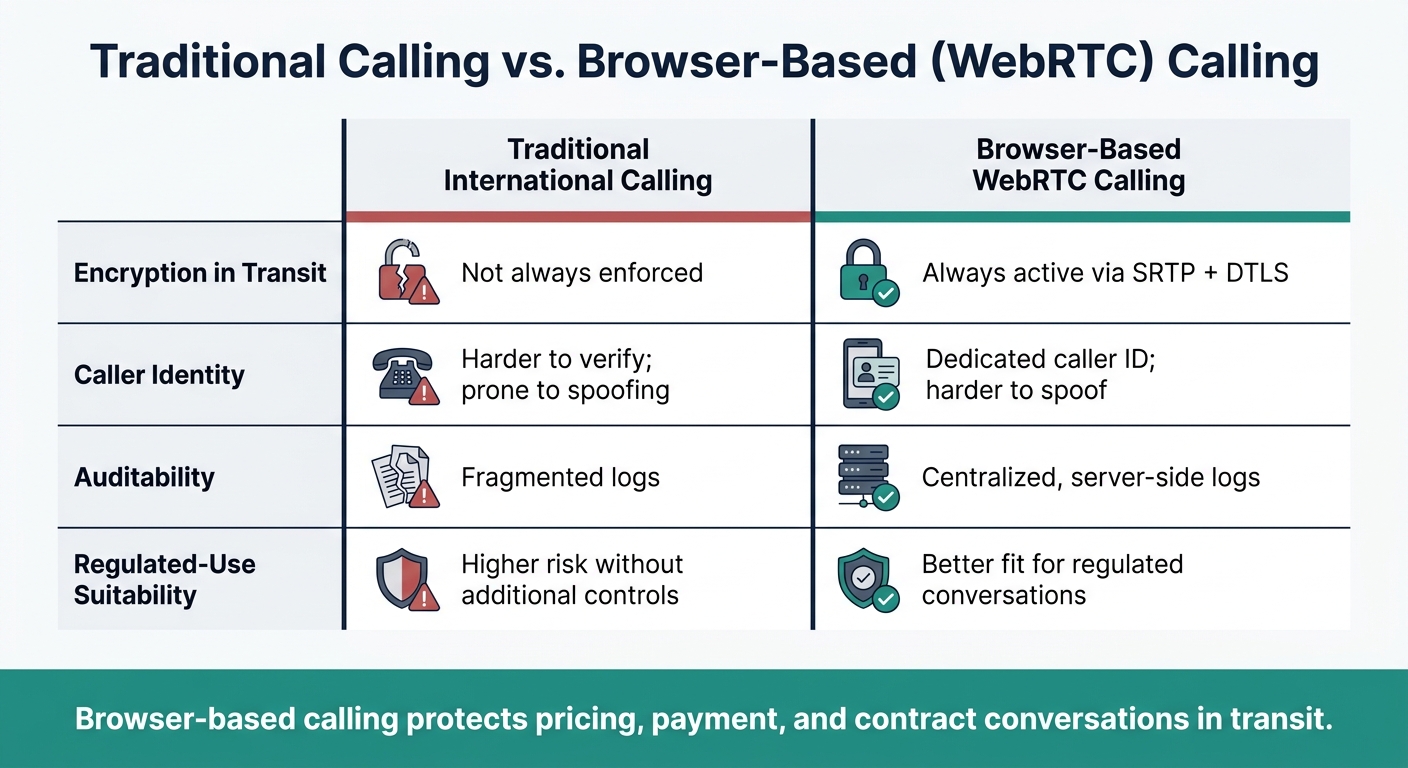
Traditional international calling vs. browser-based calling: a side-by-side look
The gap is easiest to see in three areas: encryption, identity, and accountability.
| Feature | Traditional International Calling | Browser-Based (WebRTC) Calling |
|---|---|---|
| Encryption in Transit | Not always enforced [1][4] | Always active [1][4] |
| Caller Identity | Harder to verify; prone to spoofing [1] | Harder to spoof [1] |
| Auditability | Fragmented logs [1] | Centralized logs [1] |
| Regulated-Use Suitability | Higher risk without additional controls [4] | Better fit for regulated conversations [4] |
Those controls are why browser-based calling is a safer option for deal-making.
How Browser-Based Calling Reduces Those Risks
Encrypted voice and signaling protect deal terms in transit
The first layer of protection is transport encryption, which is a core part of how WebRTC works. Every voice stream is secured with SRTP (Secure Real-time Transport Protocol), while key exchange runs through DTLS (Datagram Transport Layer Security). In plain English, that means pricing talks, payment details, and contract terms stay encrypted while moving across the network[1].
Call setup data usually moves over TLS (Transport Layer Security) through secure WebSockets (WSS). That helps stop anyone from intercepting participant details or altering the connection before the call even starts[1].
Caller identity and browser controls reduce fraud and shadow IT
Identity checks add another layer. A dedicated caller ID helps confirm who is calling and lowers spoofing risk during sensitive banking or legal verification calls[1][4].
There’s also a practical upside to running the call in a browser: users don’t need to install anything. That cuts shadow IT and lowers the risk that comes with unmanaged software[4]. Browser sandboxing keeps the call session separate from other tabs and local data[4]. Microphone access also depends on a browser permission prompt, so a call can’t begin unless the user allows it[4]. On top of that, WebRTC features don’t work on non-HTTPS sites, which means the platform has to run on HTTPS[4].
Call logs and access controls support accountability
Platforms that log call setup and teardown events create an audit trail that can help with compliance reviews and disputes[1]. Server-side recording also keeps the record in place even if a tab closes or a device goes to sleep[1].
Dasfone, for example, supports secure browser calling with dedicated caller ID for teams reaching overseas offices or banks without installing apps.
Where Secure Browser-Based Calling Helps Close Deals
These controls matter most when a live call can move money, lock in terms, or push a deal across the finish line.
Supplier and procurement negotiations across borders
When you’re negotiating pricing, delivery terms, or penalties with an overseas supplier, a single misheard number can shift the whole agreement. Browser-based calling gives you clearer audio than standard phone lines, which makes key figures easier to hear on both sides. Clearer audio and encrypted recording also help keep a record of what was agreed.
That same layer of protection matters when the call turns into a payment or verification step.
Banking, finance, and verification calls with overseas offices
Cross-border payments and verification calls often depend on using a recognizable number that overseas finance teams will actually answer. A visible, trusted number can be the difference between getting through and getting ignored [3]. Dasfone supports browser-based international calling with secure encryption, HD audio, global coverage, and dedicated caller ID.
Legal, compliance, sales, and investor calls on the go
High-stakes calls don’t always happen from a desk. They happen in hotels, airports, coworking spaces, and home offices, where public Wi-Fi can put private conversations at risk. For legal and compliance teams, recorded calls create a clear record for approvals and disputes. Sales and investor teams get speed on their side too: there’s no desktop client or app install, so a call can start from a browser tab in seconds.
That kind of fast access can help keep deals moving.
The next step is choosing a platform with the security, identity, and pricing controls these calls require.
What to Check Before Choosing a Secure Browser-Based Calling Platform
Security, compliance, and global calling basics to verify
Once you’ve looked at the risks, the next step is simple: check whether the platform can handle secure deal calls for pricing calls, verification calls, and contract discussions.
Start with the core security pieces. Verify that the platform uses WebRTC with DTLS-SRTP for media and TLS/WSS for signaling[1].
Then look at the controls around the call itself. You’ll want to verify:
- Signaling logs
- Admin control over recording and retention
- SOC 2 Type II or ISO 27001
- International reach to landlines and mobile numbers[2][5][3]
That mix matters. Security during the call is one thing. Control, auditability, and the ability to place calls across borders are just as important when business is moving fast.
Why caller ID, audio quality, and pricing transparency matter
A trusted caller ID can make the difference between a call getting answered or ignored. Verify that the platform offers dedicated caller ID for business calls. It shows a business identity without exposing a personal number[1][4].
Audio quality matters just as much. If you’re discussing pricing, dates, or contract terms, people need to hear every word clearly. A small misunderstanding on a number or deadline can turn into a big problem later.
Pricing should also be easy to understand, especially for teams that call overseas partners only from time to time. A pay-as-you-go model makes more sense when call volume changes month to month, because it avoids paying for fixed monthly plans that may sit half-used. Dasfone uses this model with a $5 minimum top-up.
Conclusion: Secure calls protect trust, compliance, and deal momentum
With those checks in place, the last question is pretty practical: does the platform support secure business calling without slowing your team down?
Secure calling helps protect trust, compliance, and deal progress. For secure, app-free international calling to offices, banks, and counterparties, Dasfone fits the needs of global business teams.
FAQs
How secure is browser-based calling for sharing bank details?
Browser-based calling is highly secure. It uses enterprise-grade encryption such as TLS, SRTP, and DTLS-SRTP - the same standards used to protect online banking.
That means shared bank details are protected from tampering and eavesdropping during the call.
Do I need to install anything to make secure international calls?
No. With browser-based platforms like dasfone, you can make secure international calls right from your browser, so there’s nothing to install.
It also supports high-definition calling in the browser.
What should I check before choosing a browser-based calling platform?
Check the basics: security, browser and network compatibility, ease of setup, calling features, and reliability.
Look for encrypted channels and secure credential management. Make sure it runs well across major browsers and enterprise networks. A no-download setup helps people get started fast, without extra friction.
It should also support the calling features you need day to day, while giving you real-time call quality monitoring so you can spot issues as they happen.
Related Articles
Ready to Make International Calls?
Try dasfone today and make your first international call in seconds. No app download, no subscription—just instant, affordable calling from your browser.
Start Calling Now